Most delivery risk in data science does not come from modelling. It comes from unclear questions, untested assumptions, fragile pipelines, and poor handover. This playbook reflects how I reduce those risks and consistently deliver work that is trusted, scalable, and adopted.
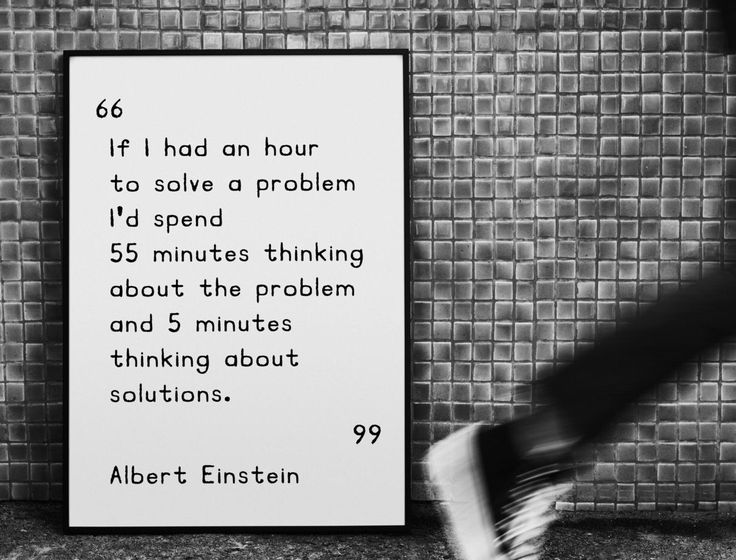
1. Start with the Decision, Not the Model
Every project starts by making three things explicit:
- What decision this work is meant to inform or change
- Who the consumer is (commercial, operations, leadership)
- What “success” means in practice
The business rarely arrives with a clean question. More often, they arrive with observations from the real world. My role is to translate those observations into a testable problem statement and write it down early. That statement becomes the anchor when trade-offs arise later.
2. Work Backwards from the Final Artefact
Before building anything, I define the outputs:
- Slides for decision-making
- README files for reproducibility and handover
- Tables, dashboards, or recommendation outputs
This prevents over-engineering and keeps the work decision-ready, not just technically correct.
3. Plan in Phases, Not Guesswork
I structure work into clear phases, each with a concrete output and review point:
- Scope and assumptions
- Data readiness
- Feature or metric logic
- Modelling or analysis
- Validation and sense-checking
- Packaging and handover
This makes progress visible and risks apparent early.
4. Optimise for Credibility
In commercial environments, I consistently prioritise:
- Stability over novelty
- Explainability over marginal performance gains
- Guardrails over edge-case optimisation
A solution that is trusted and repeatable is more valuable than one that is impressive but fragile.
5. Design for Scale from Day One
Most work needs to run across multiple markets, channels, and uneven data quality. I therefore favour:
- Config-driven logic over hard-coding
- Parameterisation over forks
- Reusable pipelines and templates
If something only works once, it is a prototype, not a solution.
6. Be Explicit About Architecture Boundaries
At scale, transitions between systems are design decisions, not implementation details. I am deliberate about where feature engineering happens, where modelling happens, and how data moves between environments because these choices directly affect reliability and operational risk.
7. Documentation Is a Delivery Artefact
README files are not optional. They capture decisions, assumptions, limitations, and intended use. If something is not written down, it will eventually be misunderstood.
8. Slides as a Thinking Tool
I use slides to enforce discipline:
- One message per slide
- Evidence supports the message
- Detail lives in appendices
If something cannot be explained clearly on a slide, the logic is usually not yet clean.
9. Separate “Works” from “Safe to Deploy”
A key part of my role is distinguishing between what is technically correct and what is commercially safe to deploy. This includes flagging risks around metrics, data limitations, and misuse that could erode trust.
10. How I Use ChatGPT
I use ChatGPT to accelerate thinking, not replace judgement. It helps me:
- Turn complex reasoning into clear narrative
- Draft first versions of README files and slides
- Stress-test assumptions and structure
Accountability, validation, and decisions remain mine.
11. My Quality Bar
Before work is complete, I ask:
- Can this run again without me?
- Can I defend the trade-offs?
- Are the limitations explicit?
If the answer to any of these is no, the work is not finished.